Practice Pad Buying Guide: Size, Surface, Rebound and Mounting
What size practice pad should you get? Compare 1- to 12-inch pads, rubber vs. low-rebound polyurethane, snare-sound pads, knee pads and 8 mm mounts.
Ökecajon Workshop18 min read
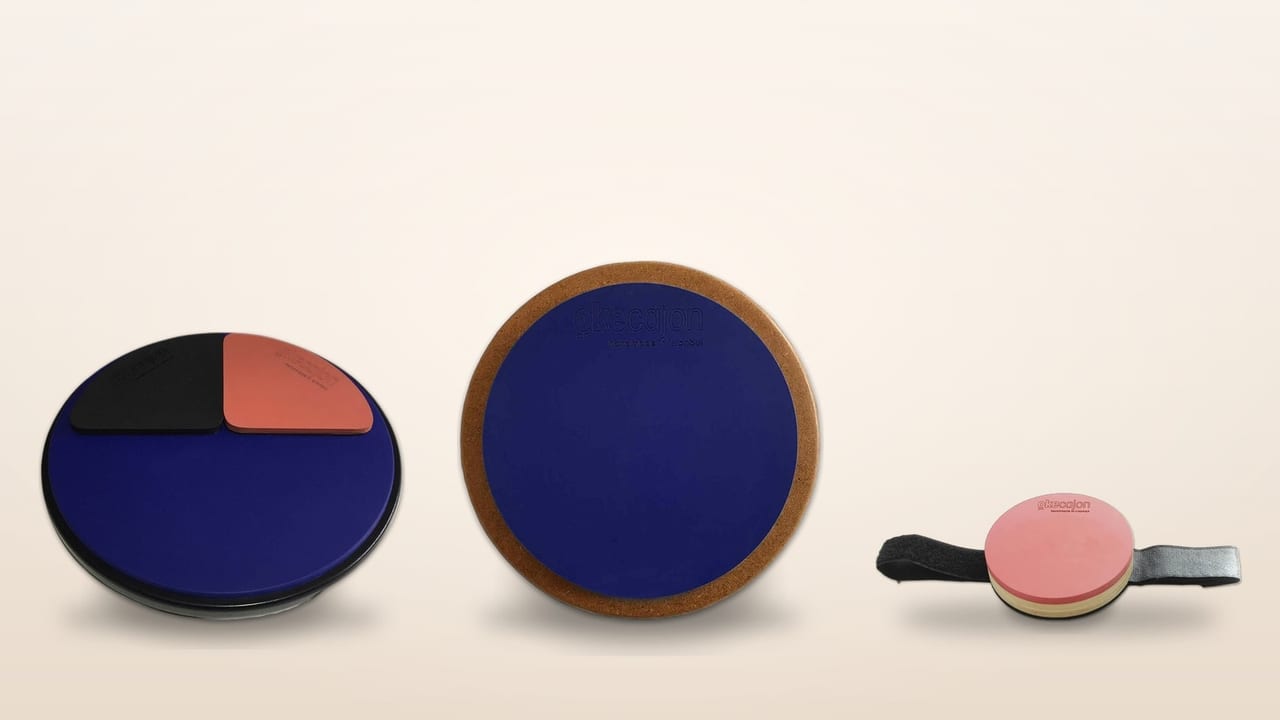
In this article
- What should you look for in a practice pad?
- What size practice pad should I get?
- Ökecajon practice pad sizes and weights
- Rubber or low-rebound puff? Practice pad surfaces
- What is rebound, and why does it matter?
- What's the quietest type of practice pad?
- What are double-sided and multi-surface pads for?
- What is a practice pad with snare sound?
- Who needs a knee practice pad?
- How do you mount a practice pad on a cymbal stand?
- What is a kick pad?
- Which practice pad for which situation?
- What's in the Volkan Öktem and Onur Akça signature pad lines?
- Frequently asked questions
- Sources
A practice pad is a surface drummers hit with sticks to practice quietly or warm up before playing (Wikipedia). We cover what a pad is and how to use one in What Is a Practice Pad?; this guide is about choosing one. The measurements and weights in the tables come from the Ökecajon catalog. Because the wooden bases are handcrafted, the catalog notes that their dimensions can vary by 1–5 mm.
What should you look for in a practice pad?#
Look at six things: size, surface material, rebound, number of surfaces, weight and mounting. Here's a quick checklist; each point gets its own section below.
- Size: 10–12 in for a table or stand, 6 in for your bag, 4 in for your knee.
- Surface: Natural rubber for a drumhead-like feel; puff (polyurethane) for quieter, low-rebound practice.
- Rebound: Decide how much you want the stick to bounce back after each stroke.
- Number of surfaces: One surface, or a double- or three-surface pad that puts different rebounds on one pad?
- Weight and base: Go light if you'll carry it, and look for a non-slip base so it stays put on a table.
- Mounting and extras: An 8 mm threaded insert for a cymbal stand, metal beads for a snare sound, or a model built for rimshots and brush practice.
What size practice pad should I get?#
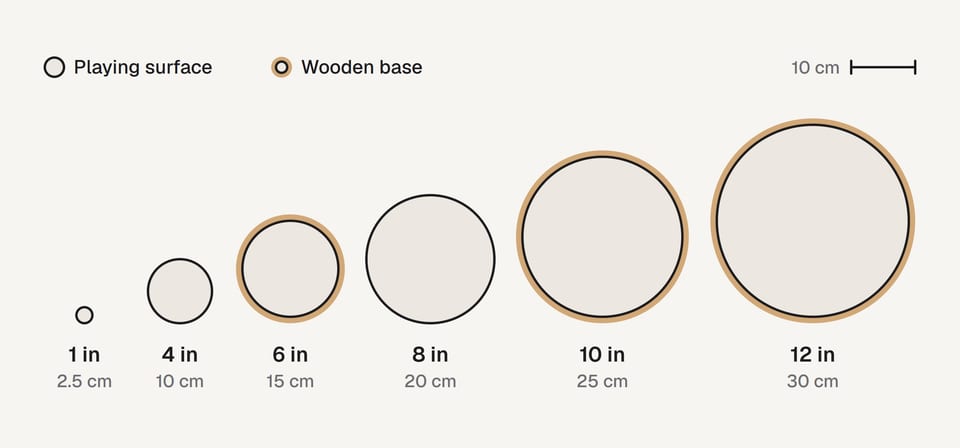
For one pad at home on a table or stand, get 12 inches; if portability comes first, get 6 inches; to play on your leg, get a 4-inch knee pad. A 10-inch pad is a slightly smaller, usually lighter middle ground, and 8 inches is a compact size between 6 and 10. The 1-inch and 1.25-inch pads are keychain-size minis.
Vic Firth offers its double-sided pad in 6- and 12-inch sizes and notes that the 12-inch fits most snare stands (Vic Firth). What really decides it is where you'll play: on a table, a bigger surface is more comfortable, while in a gig bag every inch and every ounce counts.
Ökecajon practice pad sizes and weights#
| Size | Playing surface | Wooden base | Weight | Models |
|---|---|---|---|---|
| 1 in | ~1 in (2.5 cm) | ~1 in (2.5 cm) | 40 g (1.4 oz) | PR-1 |
| 1.25 in | ~1.4 in (3.5 cm) | ~1.4 in (3.5 cm) | 40 g (1.4 oz) | PR-2 |
| 4 in (knee) | ~3.9–4.3 in (10–11 cm) | ~3.9–4.3 in (10–11 cm) | 70–155 g (2.5–5.5 oz) | PRK-4, PRW-4, PRP-4, Snare Knee Pad, VO-KDP05, VO-MDP04, VO-TDP03 |
| 6 in | ~5.5–5.9 in (14–15 cm) | ~6.7 in (17 cm) | 350–460 g (0.8–1 lb) | PR-6, PRV-6, PRW-6, PRW-6S, PRP-6, VO-SP06 |
| 8 in | ~7.9 in (20 cm); oval model ~7.9 × 5.9 in (20 × 15 cm) | ~7.9 in (20 cm) | 475–540 g (1–1.2 lb) | PRO-8K, VO-KP08 |
| 10 in | ~9.4–9.8 in (24–25 cm); Emoji pads ~9.4–9.8 × 5.9 in | ~10.6 in (27 cm) | 500–1410 g (1.1–3.1 lb) | PR-10, Poss-10, Pods-10, Pop-10, PPP-10, PEP-10, PRE-10, OA 10, VO-MP02 |
| 12 in | ~11.4–11.8 in (29–30 cm) | ~12.6 in (32 cm) | 950–2160 g (2.1–4.8 lb) | PR-12, PRW-12, PRDS-12, PRTS-12, PRMS-12, PRMSS-12, Pop-12, PPP-12, OA 12 |
On Ökecajon pads, the inch size gives the approximate diameter of the playing surface: a 12-inch pad has about 11.8 in (30 cm) of rubber on a 12.6 in (32 cm) wooden base. On the 6-, 10- and 12-inch models, the base is 2–3 cm (about an inch) larger than the surface, and puff surfaces run about 1 cm smaller than rubber ones of the same size. For reference, one inch is exactly 2.54 cm, so 12 inches is 30.48 cm (Wikipedia).
If the pad goes in your bag every day, weight matters: the 6-inch pads weigh 350–460 g (0.8–1 lb) and the 12-inch pads 950–2160 g (2.1–4.8 lb). Knee pads come in at 70–155 g (2.5–5.5 oz); only the 1-inch and 1.25-inch minis (40 g) are lighter.
Rubber or low-rebound puff? Practice pad surfaces#
Choose natural rubber if you want a drumhead-like feel with lively bounce; choose puff if you want a quieter surface that makes you lift the stick yourself. "Puff" is the term the Ökecajon catalog uses for its polyurethane playing surface, and the catalog makes a point of saying it isn't rubber.
| Surface | How the catalog describes it | Example models |
|---|---|---|
| Natural rubber | Soft natural rubber that gives "a realistic feel" | PR-12, PR-10, PRO-8K, PRE-10 |
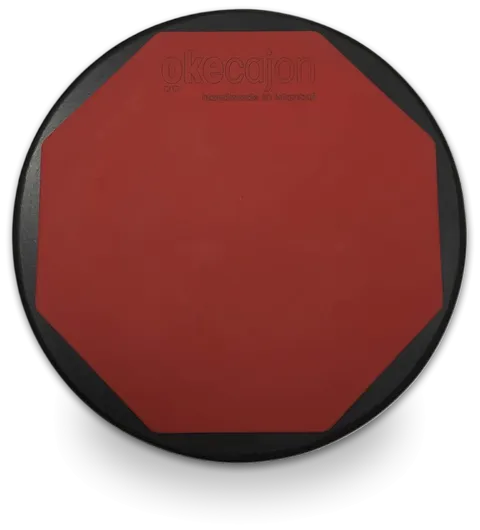
| Wheel (tire-track) rubber | Black rubber with a tire track that lands in a different spot on every pad | PRW-12, PRW-6, PRW-6S, PRW-4 |
| Puff | Polyurethane, not rubber; low rebound, low volume | Pop-12, PPP-12, Pop-10, PPP-10, PRP-6, PRP-4 |
| Cushion | The "cushioned (soft)" surface on Volkan Öktem signature pads | VO-MP02, VO-MDP04, VO-TDP03 |
| Puff over rubber | The back of the Onur Akça signature pads; the front is rubber | OA 10, OA 12 |
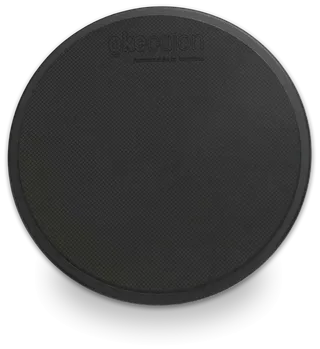 ÖkecajonPop-12 PuffPractice Pad, 12 Inch, Single-Sided, Puff Pad₺100View
Other brands use other surfaces too. Wikipedia describes three basic designs: Mylar (the film used in drumheads) stretched over foam or rubber, a thin layer of natural or synthetic rubber in various densities, and mesh stretched over a frame (Wikipedia). The Evans RealFeel 12-inch pad, for example, uses natural gum rubber (D'Addario), while Vic Firth's Heavy Hitter Stockpad uses silicone (Vic Firth).
What is rebound, and why does it matter?#
Rebound is how much the stick bounces back after it hits the surface. A high-rebound surface sends the stick back to you; on a low-rebound surface, your wrists and fingers have to lift it.
According to Wikipedia, pads can be built either to approximate the tension and response of a real drumhead or to give less rebound so your muscles work harder (Wikipedia). Vic Firth draws the same line between the two sides of its double-sided pad: the softer gray rubber side feels like a drumhead and gives your wrists a workout, while the harder black side has quick rebound, tight articulation and slightly more volume (Vic Firth).
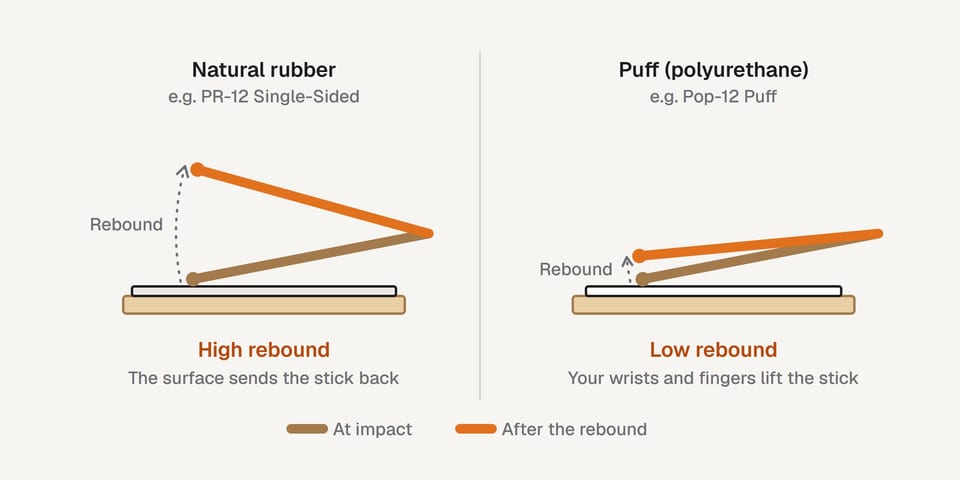
In the Ökecajon catalog, low rebound is listed for the puff pads: the Pop-12 Puff, 12-inch Polygonal Puff Pad, Pop-10 Puff, 10-inch Polygonal Puff Pad, 6-inch Puff Practice Pad and 4-inch Puff Pad. The 10-inch Emoji Puff Pad is listed as low-rebound too. For models that pair rubber with puff on one pad, the catalog simply says "different rebounds."
A split that works well: do your warm-ups and speed work on the bouncier surface, and your strength and control work on the low-rebound one. Playing the 40 essential drum rudiments, the basic sticking patterns of drumming, on both surfaces makes the difference easy to feel.
What's the quietest type of practice pad?#
If keeping the volume down is your main concern, choose a puff pad: the catalog describes these models specifically as low-volume and low-rebound (the Pop-12 Puff and 12-inch Polygonal Puff Pad, for example). No pad is completely silent, and since we haven't measured decibel levels, we don't compare models by the numbers.
Surface material affects volume. Wikipedia notes that mesh is quieter when struck than rubber or Mylar (Wikipedia). Hardness matters within a material, too: Vic Firth says the hard black rubber side of its pad has slightly more volume than the soft gray side (Vic Firth).
If you want rubber by day and puff at night, a double-sided pad with a puff side gives you both: the PRDS-12 and Pods-10 have a puff back, and the OA 10 and OA 12 have a puff-over-rubber back.
What are double-sided and multi-surface pads for?#
Multi-surface pads put different rebounds on a single pad, so you can switch between surfaces that respond differently without buying a second pad. The catalog recommends them for drummers and students "who want to practice with different rebounds on the same pad."
| Model | Size | Surfaces (from the catalog) | Weight | Thickness |
|---|---|---|---|---|
| PRDS-12 Double-Sided | 12 in | Front: natural rubber; back: puff | 1650 g (3.6 lb) | 1.3 in (3.4 cm) |
| PRTS-12 Two-Surface | 12 in | Two surfaces with two different rebounds | 1650 g (3.6 lb) | 1.5 in (3.8 cm) |
| PRMS-12 Three-Surface | 12 in | Three surfaces with three different rebounds | 1730 g (3.8 lb) | 1.5 in (3.8 cm) |
| PRMSS-12 Snare Three-Surface | 12 in | Three different surfaces (green) | 1730 g (3.8 lb) | 1.5 in (3.8 cm) |
| OA 12 | 12 in | Front: rubber; back: puff over rubber | 2160 g (4.8 lb) | 1.6 in (4.0 cm) |
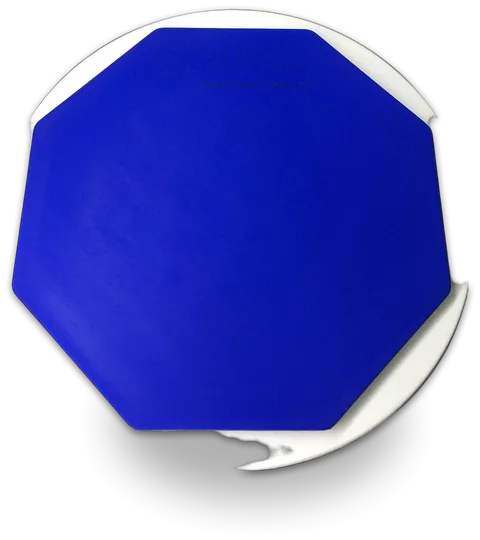
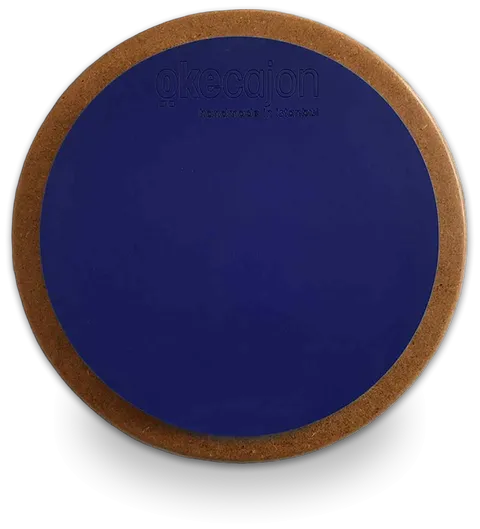
| Pods-10 Double-Sided | 10 in | Front: octagonal blue rubber; back: round puff | 1130 g (2.5 lb) | 1.3 in (3.4 cm) |
| OA 10 | 10 in | Front: rubber; back: puff over rubber | 1410 g (3.1 lb) | 1.6 in (4.0 cm) |
| VO-MP02 Cushion Pad | 10 in | Double-sided; soft rubber and cushion surface, rim for rimshots | 1265 g (2.8 lb) | 1.7 in (4.2 cm) |
| Emoji Rubber Pad (PRE-10) | 10 in | Two natural rubber surfaces on one side | 700 g (1.5 lb) | 0.8 in (2.1 cm) |
On the double-sided models, you flip the pad over to switch surfaces. The Emoji Rubber Pad is different: both surfaces are on the same side, and the catalog calls it a "single-sided, dual-surface" pad.
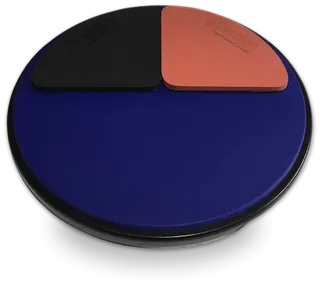 ÖkecajonPRMS-12 Three-SurfacePractice Pad, 12 Inch, Three-Surface, Drum Pad₺100View
What is a practice pad with snare sound?#
A snare-sound practice pad has metal beads inside its wooden body, which add a snare sound to every stroke. The catalog recommends these pads for drummers and students "who want to practice with a snare sound."
| Model | Size | Surface | Key features |
|---|---|---|---|
| Poss-10 Snare Pad (POSS-10) | 10 in (rubber ~9.8 in / 25 cm) | Octagonal blue natural rubber | 1050 g (2.3 lb), 0.7 in (1.8 cm) thick |
| VO-TP01 Snare Pad | 10 in (rubber ~9.8 in / 25 cm) | Soft rubber, single-sided | Rim for rimshots, layers for brush practice, hand-signed by Volkan Öktem |
| 4-inch Snare Knee Pad | 4 in (~10 cm) | Soft rubber | Hook-and-loop strap, two-level non-slip base, ~155 g (5.5 oz) |
| VO-TDP03 Snare Knee Pad | ~4.3 in (11 cm) | Cushion | Hook-and-loop strap, two-level non-slip base, 134 g (4.7 oz) |
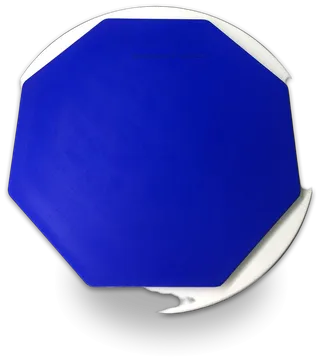 ÖkecajonPoss-10 Snare PadPractice Pad, 10 Inch, Single-Sided, Rubber, Snare Pad, Drum Practice Pad, Pad₺100View
Who needs a knee practice pad?#
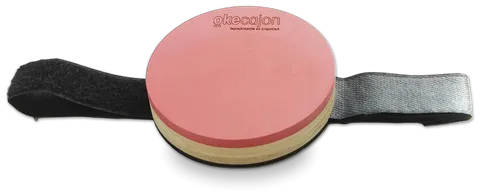
A knee pad is a small pad, about 4 in (10–11 cm) across, that straps to your thigh with a hook-and-loop strap, so you can practice without a table or stand. Practice pads can already be played on your lap (Wikipedia); a knee pad just keeps the pad in place. It's especially handy on the road, between rehearsals or for warming up before a show.
All seven Ökecajon knee pads have a hook-and-loop strap and a two-level non-slip base; they differ in surface and weight.
| Model | Surface | Size | Weight |
|---|---|---|---|
| 4-inch Knee Pad (PRK-4) | Soft rubber | ~3.9 in (10 cm) | ~125 g (4.4 oz) |
| 4-inch Wheel Pad (PRW-4) | Black rubber with tire track | ~3.9 in (10 cm) | ~125 g (4.4 oz) |
| 4-inch Puff Pad (PRP-4) | Puff, low rebound | ~3.9 in (10 cm) | ~70 g (2.5 oz) |
| 4-inch Snare Knee Pad | Soft rubber, metal beads in the body | ~3.9 in (10 cm) | ~155 g (5.5 oz) |
| VO-KDP05 Rubber Knee Pad | Soft rubber | ~3.9 in (10 cm) | 125 g (4.4 oz) |
| VO-MDP04 Cushion Pad | Cushion | ~4.3 in (11 cm) | 95 g (3.4 oz) |
| VO-TDP03 Snare Knee Pad | Cushion, metal beads in the body | ~4.3 in (11 cm) | 134 g (4.7 oz) |
How do you mount a practice pad on a cymbal stand?#
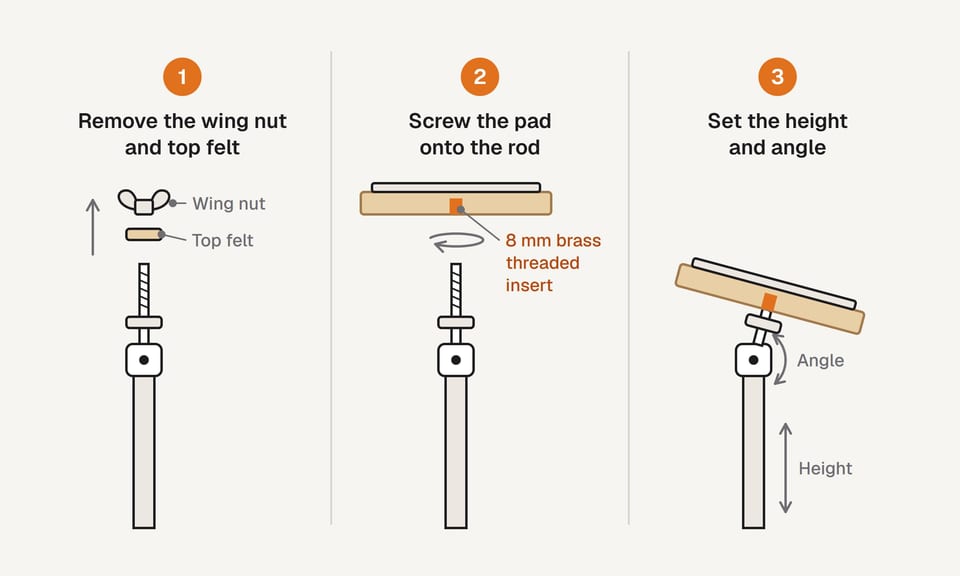
Pads with an 8 mm brass threaded insert underneath screw onto the threaded rod at the top of a cymbal stand; Ökecajon calls these models "mountable." Wikipedia notes that many pads have fixing points for existing hardware such as a cymbal or snare stand (Wikipedia), and Evans says the 8 mm threaded insert on its 7-inch Apprentice pad is for mounting to most standard cymbal stands (D'Addario). That makes a cymbal stand a ready-made practice pad stand. As the catalog notes, the stand isn't included with the 6-inch mountable pads.
Here's the usual order:
- Remove the wing nut and top felt from the top of the cymbal stand, along with the cymbal if there is one.
- Hold the pad so the brass insert underneath lines up with the tip of the rod, then turn the pad to screw it on. If the insert doesn't thread on easily, don't force it.
- Set the stand's height and tilt so your shoulders stay relaxed and the sticks drop onto the surface comfortably.
- Before you start playing, check that the pad doesn't wobble and the stand's legs are fully open.
| Model | Surface | Size (surface / base) | Weight |
|---|---|---|---|
| 6-inch Mountable Practice Pad (PRV-6) | Soft rubber in red, blue, green or yellow | ~5.9 / 6.7 in (15 / 17 cm) | 450 g (1 lb) |
| 6-inch Mountable Wheel Pad (PRW-6S) | Black rubber with tire track | ~5.9 / 6.7 in (15 / 17 cm) | 450 g (1 lb) |
| VO-SP06 Mountable Pad | Soft rubber, 3 mm non-slip EVA base | ~5.9 / 6.7 in (15 / 17 cm) | 460 g (1 lb) |
| 1-inch Keychain Pad (PR-1) | Natural rubber, keychain hook | ~1 in (2.5 cm) | 40 g (1.4 oz) |
A pad without a threaded insert can sit on a snare stand instead. Vic Firth says its 12-inch pad fits most snare stands, but whether a pad sits securely depends on the diameter and shape of its base, so compare your stand's range with the pad's base size.
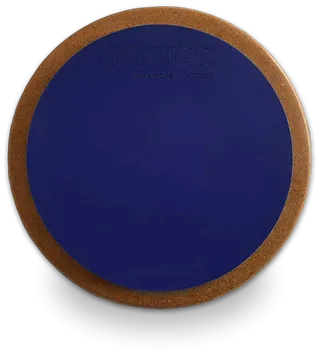 Ökecajon6-inch Mountable Practice PadPractice Pad, 6 Inch, Mountable Rubber Pad, Drum Pad₺100View
What is a kick pad?#
A kick pad is a practice pad for your bass drum pedal, built for low-volume footwork; the Ökecajon Kick Pad (Kp-01) also works with twin pedals. It's handcrafted from birch, with four different pad surfaces and a sound-absorbing non-slip base. One kick pedal beater comes in the box; the drum pedal isn't included.
If you want to work on your feet while your hands are on the practice pad, you can use the two pads together.
Which practice pad for which situation?#
For a first pad at home, pick 12-inch natural rubber; for late-night practice, puff; for travel, a knee pad or a 6-inch pad; and next to your kit, a mountable 6-inch pad. The chart and table below match each situation to suitable models, with the catalog details behind them.
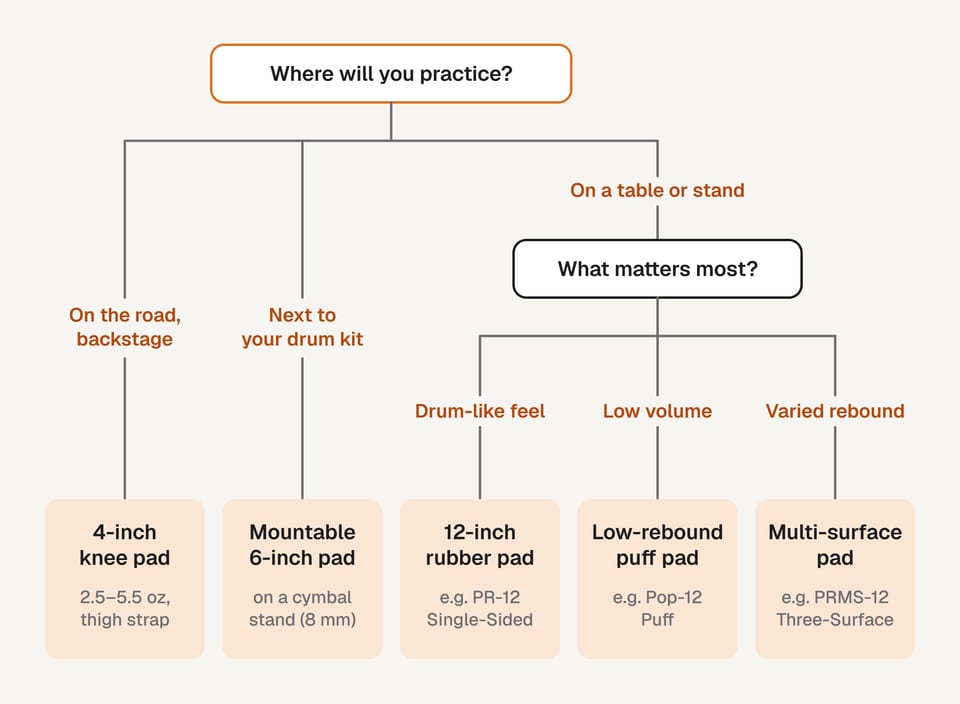
| Situation | Models | Catalog detail |
|---|---|---|
| First pad at home | PR-12 Single-Sided or PRDS-12 Double-Sided | Large natural rubber surface; the PRDS-12 has a puff back |
| Late nights and apartments | Pop-12 Puff, 12-inch Polygonal Puff Pad, Pop-10 Puff | Puff surface: low rebound, low volume |
| Travel and rehearsal breaks | 4-inch knee pads or the 6-inch Practice Pad | 70–155 g (2.5–5.5 oz) and 450 g (1 lb) |
| Next to your drum kit | 6-inch Mountable Practice Pad, PRW-6S, VO-SP06 | 8 mm brass threaded insert |
| Practicing with a snare sound | Poss-10 Snare Pad, VO-TP01 | Metal beads in the wooden body |
| Working with different rebounds | PRMS-12, PRTS-12, OA 12 | Two or three different surfaces |
| Rimshots and brushes | VO-MP02, VO-TP01 | Rim for rimshots and layers for brush practice |
| Footwork | Kick Pad | Works with twin pedals, four surfaces |
| Gifts | 1-inch Keychain Pad, 1.25-inch Pad, personalized products | Keychain size; examples of custom-made items |
Once you've picked a pad, our 4-week beginner practice pad routine walks you through daily exercises with metronome tempos. You can compare every model side by side in the practice pad category.
What's in the Volkan Öktem and Onur Akça signature pad lines?#
Ökecajon makes two signature pad lines: the seven-model Volkan Öktem Signature (VO) series and the two-model Onur Akça Signature (OA) series. The details below come from the product catalog.
Volkan Öktem Signature Series:
- VO-MP02 Cushion Pad: 10 in (25 cm), double-sided with soft rubber and a cushion surface, rim for rimshots, layers for brush practice, 1265 g (2.8 lb).
- VO-TP01 Snare Pad: 10 in (25 cm), single-sided, metal beads, rim for rimshots, layers for brush practice; hand-signed by Volkan Öktem.
- VO-KP08 Rubber Pad: 8 in (20 cm), single-sided soft rubber, about 540 g (1.2 lb).
- VO-SP06 Mountable Pad: 6 in (15 cm), 8 mm brass threaded insert for a cymbal stand, 460 g (1 lb).
- VO-KDP05 Rubber Knee Pad: 4 in (10 cm), hook-and-loop strap, 125 g (4.4 oz).
- VO-MDP04 Cushion Pad: 4.3 in (11 cm) cushion knee pad, hook-and-loop strap, 95 g (3.4 oz).
- VO-TDP03 Snare Knee Pad: 4.3 in (11 cm) cushion knee pad with metal beads, 134 g (4.7 oz).
Onur Akça Signature Series: the OA 10 and OA 12 are double-sided, with a rubber front and a puff-over-rubber back. Both are 1.6 in (4.0 cm) thick. The OA 10 weighs 1410 g (3.1 lb), and at 2160 g (4.8 lb) the OA 12 is the heaviest 12-inch pad in the catalog.
Frequently asked questions
What size practice pad should a beginner get?
For practice at home on a table or stand, a 12-inch pad is a good choice: its playing surface of about 11.8 in (30 cm) gives both hands plenty of room. If you'll carry the pad often, a 6-inch model is more practical. Ökecajon's 6-inch pads weigh 350–460 g (about 0.8–1 lb), while its 12-inch pads weigh 950–2160 g (about 2.1–4.8 lb).
Is a 6-inch or 12-inch practice pad better?
They do different jobs. A 12-inch pad gives you a roomy surface on a table or stand, and Vic Firth notes that its own 12-inch pad fits most snare stands. A 6-inch pad slips easily into a bag, and mountable 6-inch models attach to a cymbal stand through an 8 mm threaded insert.
How big are 10-inch and 12-inch practice pads?
The size refers to the playing surface. On Ökecajon's 12-inch pads, the rubber measures about 11.8 in (30 cm) across on a 12.6 in (32 cm) wooden base; on the 10-inch pads, it's about 9.8 in (25 cm) on a 10.6 in (27 cm) base. Puff surfaces run about 1 cm (0.4 in) smaller.
What's the difference between a low-rebound puff pad and a rubber pad?
Puff is the term the Ökecajon catalog uses for its polyurethane playing surface, which isn't rubber. The catalog describes puff pads as low-rebound and low-volume, so your wrists and fingers do more of the work of lifting the stick. Natural rubber has more bounce and feels closer to a drumhead.
Can you mount a practice pad on a cymbal stand?
Yes, if the pad has a threaded insert underneath. The Ökecajon 6-inch Mountable Practice Pad, 6-inch Mountable Wheel Pad, VO-SP06 and 1-inch Keychain Pad all have an 8 mm brass insert: take off the wing nut and top felt, then screw the pad onto the stand's threaded rod. The stand isn't included with the 6-inch mountable pads.
What is a knee practice pad for?
A knee pad is a small pad, about 4 in (10–11 cm) across, that straps to your thigh with a hook-and-loop strap, so you can practice where there's no table or stand. It's especially handy on the road, between rehearsals or for warming up before a show. Ökecajon's knee pads weigh 70–155 g (about 2.5–5.5 oz) and have a two-level non-slip base.
What is the quietest type of practice pad?
In the Ökecajon catalog, the models described as low-volume and low-rebound are the ones with a puff (polyurethane) surface, such as the Pop-12 Puff, 12-inch Polygonal Puff Pad, Pop-10 Puff and 10-inch Polygonal Puff Pad. According to Wikipedia, mesh surfaces are generally quieter than rubber or Mylar. We don't have decibel measurements, so we don't compare models by the numbers.
Instruments in this article
Shop Practice Pad →
4 colors
3 colors
2 colors
5 colors
4 colors
5 colors


More from the Academy
Rhythm Academy →
Practice Pad
What Is a Practice Pad? What It's For and How to Use One
A practice pad is a quiet surface drummers use to build stick control and warm up. Learn what it does, how to set it up and use it, and what it can't do.
16 min read
Cajon
What Is a Cajon? Origins, Anatomy, Sounds and Types
A cajon is a box-shaped percussion instrument from Peru that you sit on and play with your hands. See how it's built, how it sounds and its main types.
20 min read
Percussion
Hand Percussion Instruments: Names, Types and Which One to Start With
A visual guide to hand percussion: cajons, shakers, bongos, congas, tambourines and wood blocks, how each makes sound and which is easiest to start with.
18 min read